ZENTARA

Industries · Law Enforcement

Findings that survive cross-examination.

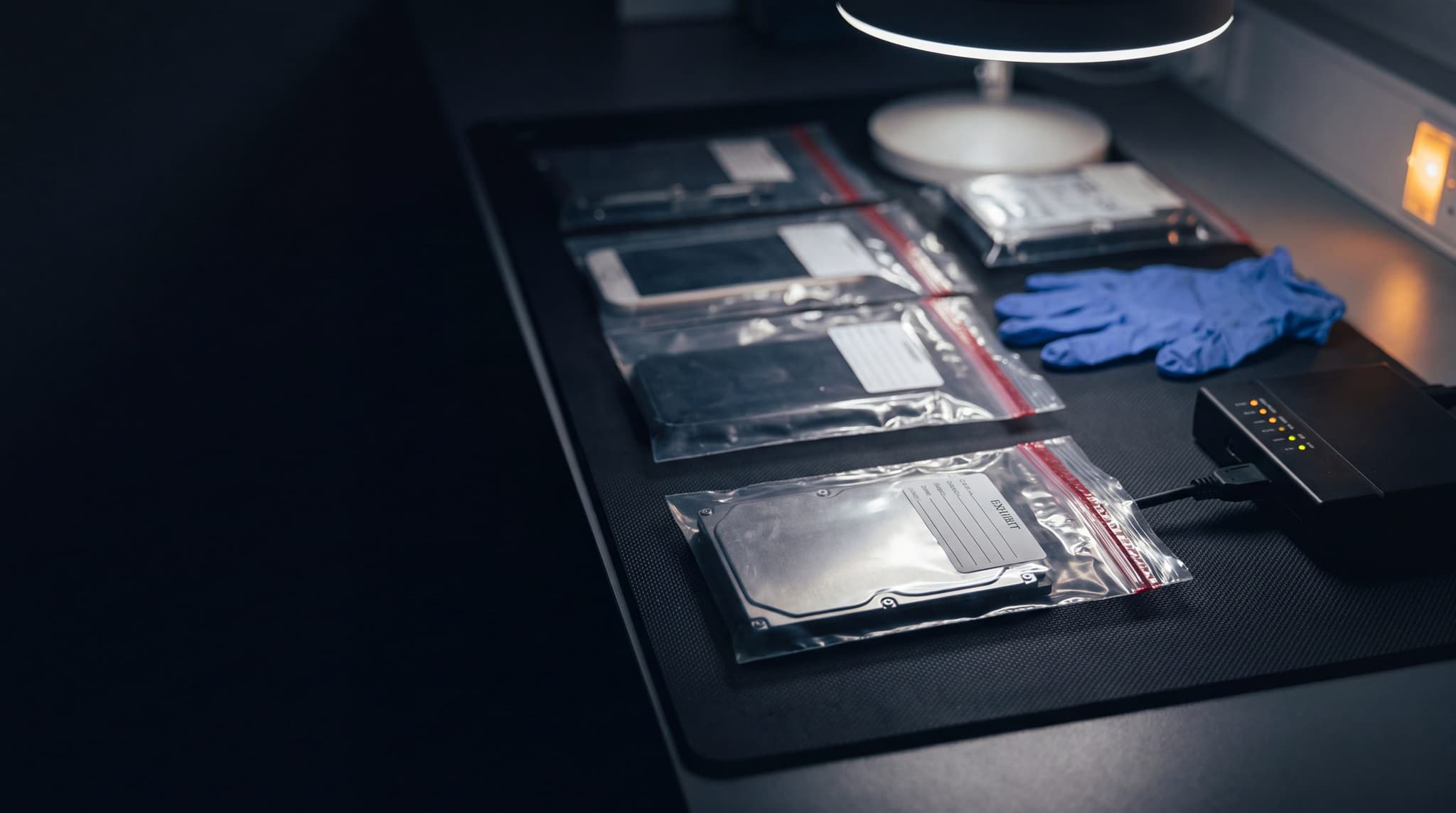
A recovered artefact that a court will not admit is worse than no artefact — it costs the case and the unit's credibility at once. Zentara works alongside Polri cyber units, prosecutors and agency forensic labs on the part that decides outcomes: acquisition that holds, chain of custody that documents itself, and examiners who will stand up and be questioned on it.

2 Jan 2026
KUHP and KUHAP baru in force
UU 1/2023 and UU 20/2025 — the procedure changed this year
Article 5(1)
Electronic documents are valid evidence
UU 1/2024, second amendment to UU ITE
ISO/IEC 17025
The accreditation behind a lab result
Competence, method validation, technically valid results
SP 800-86
NIST forensic integration guidance
The technical baseline behind a defensible method

What we are defending

Where cases are actually won and lost.

01

Seized devices

The queue is the constraint, not the technique. Throughput work — triage discipline, prioritisation and parallel examination — usually returns more than another tool licence.

02

Cloud and account data

Increasingly the evidence never touched the device. Preservation requests, lawful acquisition from providers, and reconciling what a provider returns with what an examiner can attest to.

03

Financial and crypto trails

Tracing that stands next to a PPATK analysis rather than duplicating it, and that a prosecutor can put in front of a judge without a tutorial.

04

Intrusion artefacts

Where a cybercrime case meets incident response: logs, malware, infrastructure. Attribution written to an evidentiary standard, not an intelligence one.

05

Chain of custody

The most frequent point of failure and the least glamorous to fix. Formal validity turns on integrity being demonstrable, which means the record has to be made as the work happens — reconstructed afterwards it is challengeable, and it is usually challenged.

06

The examiner in the box

Method, tool validation and reproducibility only matter on the day someone contests them. Work we produce is written to be defended by the person who did it.

Instrument · Requirement · What holds in court

The procedure changed in January. The standard did not get easier.

KUHP and KUHAP baru came into force on 2 January 2026, and electronic evidence is squarely admissible under UU 1/2024 — provided it satisfies both formal validity, meaning authenticity and integrity, and material validity, meaning relevance and reliability. Every line below is scoped to that second half.

UU 20/2025 — KUHAP

In force 2 Jan 2026

Requires

Revised criminal procedure for investigation, prosecution and trial, with strengthened transparency and accountability, expanded victim and witness rights, and explicit accommodation of digital methods.

We do

Align acquisition and reporting practice to the new procedure, and rehearse it — the first case tried under a new code is not the one to discover a gap in.

What withstands challenge

Procedure-aligned SOPs, examiner briefings

UU 1/2024 — ITE

Article 5(1)

Requires

Electronic information, electronic documents and their printouts are valid legal evidence — subject to authenticity and integrity being demonstrable.

We do

Hashing, imaging and verification practice that makes integrity a matter of record rather than assertion, from first contact with the exhibit.

What withstands challenge

Verifiable acquisition record, integrity attestation

ISO/IEC 17025

Accreditation

Requires

Competence of testing laboratories: validated methods, qualified personnel, controlled equipment, measurement traceability and demonstrable impartiality. Accredited in Indonesia by KAN against a defined scope.

We do

Laboratory process design and assessment against the standard, and the parts that fail most often in practice — transport, storage, and the handover nobody logged.

What withstands challenge

Assessed process, validated methods

NIST SP 800-86

Guidance

Requires

Integration of forensic technique into incident response — a defensible technical method rather than an ad hoc one.

We do

Method definition and tool validation, so a finding can be reproduced by a second examiner who was not there the first time.

What withstands challenge

Validated method, reproducibility record

UU 8/2010 — TPPU

Anti-money laundering

Requires

Tracing and evidencing proceeds of crime, including through digital and virtual asset channels.

We do

Blockchain and financial artefact tracing produced to evidentiary standard and structured to sit alongside a PPATK analysis rather than compete with it.

What withstands challenge

Traceable flow-of-funds exhibit

UU PDP

Republik Indonesia

Requires

Personal data obligations that constrain how investigative material is handled, retained and shared — including by state bodies.

We do

Handling design that keeps an investigation lawful in its own right, so the method does not become the defence's argument.

What withstands challenge

Retention and access controls, documented basis

Admissibility · The only score that counts

Recovered is not the same as admissible.

Most forensic capability discussions are about what can be recovered. Courts ask a different question, and they ask it late — after the work is done, in front of the person who most wants it excluded. Indonesian practice now requires electronic evidence to satisfy formal validity, meaning authenticity and integrity, and material validity, meaning relevance and reliability. The ladder below is where a piece of work sits against that. Level 3 is where most units are and it is not a criticism; it is where the tooling takes you. Levels 4 and 5 are process and documentation, which cost less than tooling and are what actually holds on the day.

Evidentiary strength

  1. 1

    Recovered

    The artefact exists. Nothing about how it was obtained is documented.

  2. 2

    Documented

    An acquisition record exists, written after the fact and by one person.

  3. 3

    Verified

    Hashes taken, integrity demonstrable, custody logged contemporaneously.

  4. 4

    Reproducible

    Method and tools validated. A second examiner reaches the same result independently.

  5. 5

    Defended

    The examiner testifies, is cross-examined, and the method holds under challenge.

Highlighted: where work has to sit before a contested hearing rather than an uncontested one.

Derived from UU 1/2024, KUHAP baru, ISO/IEC 17025 and NIST SP 800-86

Sector threat model

  • Evidence excluded on procedure rather than substance — the acquisition, not the analysis
  • Device backlogs measured in months while statutory clocks run
  • Cross-border artefacts that must satisfy a foreign court as well as an Indonesian one
  • Anti-forensics, ephemeral messaging and cloud-resident data with no local copy
  • Tooling nobody can validate, producing findings nobody can reproduce
  • Capability concentrated in a handful of examiners who eventually transfer out

What this sector answers to

The regulatory landscape for law enforcement. Our own accreditations are listed on certifications.

KUHAP — UU 20/2025KUHP — UU 1/2023UU ITE — UU 1/2024UU TPPU 8/2010UU PDPISO/IEC 17025NIST SP 800-86 — guidance

Track record

Cross-border OSINT attribution delivered to evidentiary standard, and insider investigations closed with signed findings the instructing party could act on.

For cross-border matters

Evidence gathered in Indonesia that a foreign court will also accept.

Cybercrime rarely respects a jurisdiction, and an exhibit acquired for an Indonesian file increasingly has to satisfy a prosecutor or court somewhere else as well. Working to the international standards from the start is far cheaper than reconstructing provenance for a mutual legal assistance request eighteen months later.

  • Acquisition performed to accredited laboratory practice and documented against NIST SP 800-86, which is the method reference a foreign counterpart already reads.
  • Reports produced in Bahasa Indonesia for the domestic file and English for the foreign counterpart, from one examination rather than two.
  • Provenance and custody recorded to survive a mutual legal assistance process, including the parts that get questioned — transport, storage and handover.
  • Support for liaison with foreign agencies and providers without asking your unit to share more of the matter than it should.

Before you have to justify us internally

Bringing in a security vendor is itself a risk you have to evidence.

So here is the answer to the questions your risk committee will ask, before they ask them.

Lawful authority, or we decline

We act on warrant, court order or lawful instruction within its stated scope, and we say so in writing at the start. An engagement that outruns its authority contaminates the case it was meant to serve.

Our examiners testify

Work is done by named people who will appear, explain their method and be cross-examined on it. A report nobody will stand behind is a report the other side will enjoy.

We do not act for both sides

Where we support an investigating agency we will not accept instruction from a subject of it. Conflicts are checked before scoping, not after a defence team raises one.

Your examiners end up capable

Every engagement is structured to leave capability behind — method, documentation and trained people. A unit that depends on an outside firm for routine examination has a budget problem and a continuity problem.

Tool validation is documented, not assumed

Commercial forensic tools are validated against known data sets and the results recorded. When a method is challenged, the answer is a file rather than a reputation.

Nothing about an active matter leaves it

No case material in marketing, no anonymised war stories, no reference calls about live work. Discretion is a condition of the engagement, not a courtesy extended afterwards.

VAPT & Offensive Security

Penetration testing for Law Enforcement

22 services in the catalog apply to Law Enforcement — from point-in-time pentests to red team and continuous validation.

Explore all 22
Penetration Test

External Network Penetration Test

Black-box test of internet-facing assets, perimeter exposure, and exploitable services.

Penetration Test

Internal Network Penetration Test

Assumed-breach lateral movement, AD abuse, sensitive data discovery from inside.

Penetration Test

Active Directory / Entra ID Security Assessment

Kerberoasting, AS-REP, ACL abuse, BloodHound paths, hybrid identity review.

Assessment

Firewall, Router & Switch Configuration Review

Rule base hygiene, ACL drift, hardening against CIS Benchmarks.

Penetration Test

VPN Security Assessment

IKE/IPsec, SSL VPN, split tunneling, ZTNA migration readiness.

Assessment

Email & DNS Security Review

SPF/DKIM/DMARC, MTA-STS, DNSSEC, BIMI, phishing surface.

Penetration Test

Web Application Penetration Test

OWASP Top 10, business logic, authenticated/unauthenticated flows.

Assessment

Secure Code Review (Manual + SAST)

Manual review of critical flows + SAST tooling for OWASP/CWE coverage.

Securing law enforcement agencies?

Start with a scored maturity baseline or go straight to a specialist conversation.