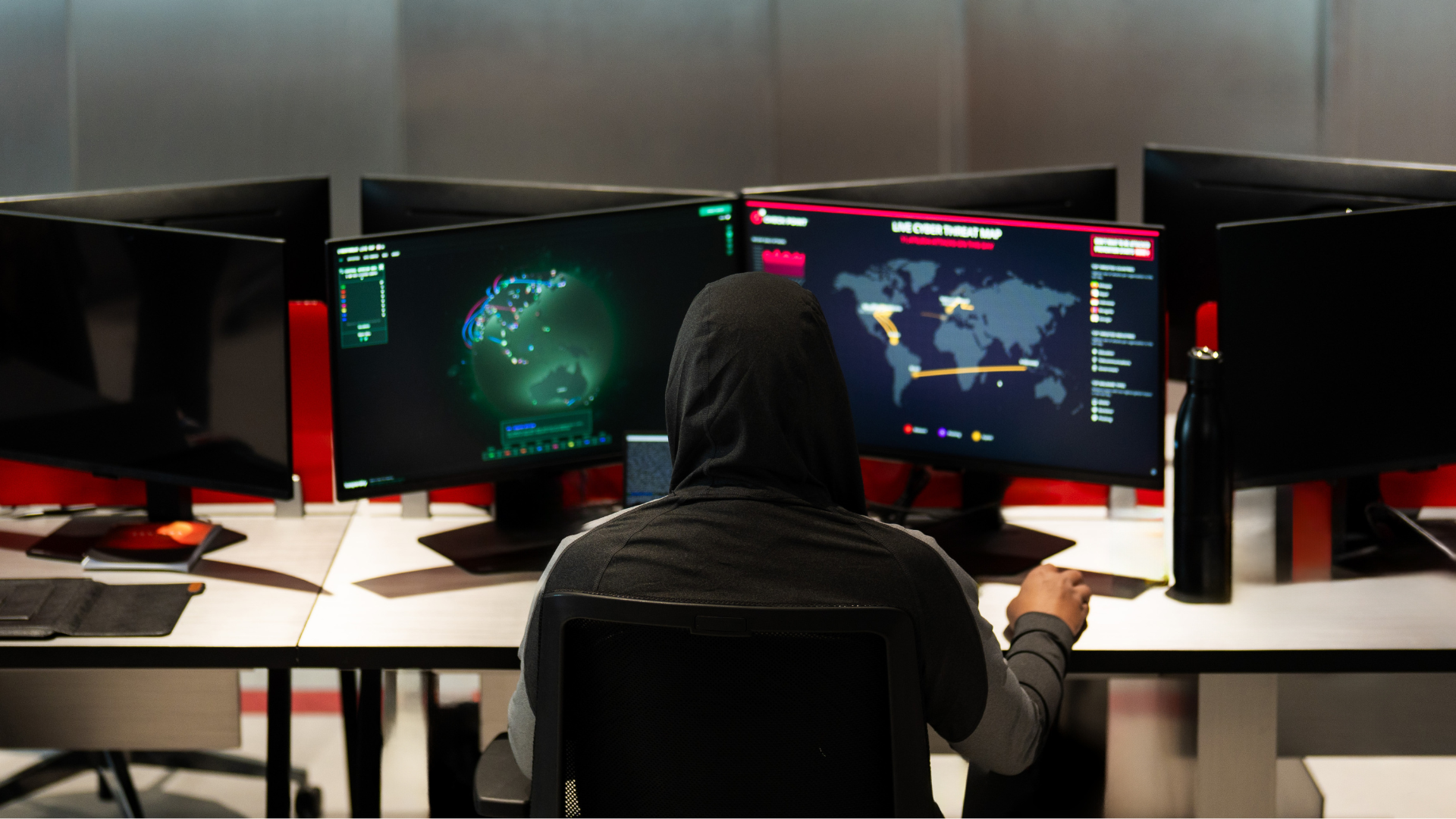

Security Operations Centers sit at the front line of an enterprise’s defensive posture, but the operational cost on the humans behind the console is often underestimated.
Across Southeast Asia and globally, blue teams report sustained alert pressure, expanding attack surfaces, understaffing, and an expectation of continuous vigilance. The result is predictable: cognitive fatigue, operational drift, and burnout that directly undermine an organization’s ability to respond to real threats.
Burnout in the SOC is not a cultural issue or a training gap. It is an architectural problem. When defensive teams operate inside workflows that demand constant triage, fragmented data analysis, and high-stakes decision-making with limited context, the human system becomes the bottleneck. Attackers exploit this reality as effectively as any technical misconfiguration.
A sustainable SOC is one that protects its defenders as deliberately as it protects its infrastructure. This requires more than wellness initiatives or efficiency campaigns. It requires a systematic redesign of how analysts process information, how tools support decision-making, and how the organization structures defensive responsibility.
Understanding SOC Burnout
Burnout within security teams typically emerges from a convergence of operational stressors: alert fatigue, excessive context switching, unreliable telemetry, and constant exposure to adversarial pressure. Analysts must interpret incomplete data streams, correlate events across siloed systems, and distinguish false positives from genuine threats under strict time constraints.
Over time, this creates cognitive overload that degrades judgment, reaction time, and confidence.
High-volume environments intensify the problem. A single shift may involve thousands of automated alerts, a subset of which require manual review. Even when teams are highly skilled, the operational model forces them into reactive patterns that leave little room for strategic analysis or continuous improvement.
Structural Factors That Drive Burnout
SOC burnout is rarely caused by personal resilience issues. It is a systemic outcome of the way defensive operations are built and staffed.
Excessive Manual Triage
Many SOCs rely on analysts to manually classify alerts, validate suspicious activity, and perform initial investigation steps. Without automated correlation and enrichment, this work becomes repetitive and cognitively draining.
Fragmented Tooling
When telemetry is distributed across SIEMs, EDR platforms, network sensors, and cloud logs without coherent integration, analysts must maintain context across multiple consoles. This increases error rates and prolongs investigation cycles.
High-Intensity, Low-Control Environments
Analysts are held accountable for incidents but often lack influence over upstream architecture, detection logic, or governance. This mismatch between responsibility and control contributes significantly to psychological strain.
Constantly Escalating Threat Pressure
Adversaries evolve rapidly, introducing new techniques that force SOCs to adapt detection logic and response processes continuously. Stability becomes rare, and analysts operate in a perpetual learning cycle.
Why Burnout Compromises Security
The impact of SOC burnout is not limited to morale. It manifests directly in measurable operational risk.
Slower Detection and Response
Fatigued analysts take longer to interpret indicators and verify alerts. This increases mean time to detect and respond, giving attackers more time inside the environment.
Higher False Negative Rates
Cognitive overload reduces the ability to recognize subtle patterns or correlate small anomalies. Complex, multi-stage intrusions are more likely to be missed.
Inconsistent Playbook Execution
Burnout leads to decision fatigue, which affects the precision and consistency of response actions. Small deviations from established workflows can amplify incident impact.
Increased Turnover and Knowledge Loss
Experienced analysts leaving the SOC results in a loss of institutional knowledge, weakening the team’s ability to identify and respond to threats effectively.
Strategies to Protect and Sustain Blue Teams
Sustaining SOC performance requires architectural, operational, and cultural interventions that reduce manual burden and reinforce decision confidence.
1. Reduce Alert Noise at the Source
Improving detection logic and eliminating redundant or low-value alerts prevents unnecessary cognitive load. High-quality data inputs and well-defined rule sets allow analysts to focus on signals that matter.
2. Automate Routine Investigation Steps
Routine enrichment, correlation, and initial triage steps can be offloaded to automated workflows or AI-assisted systems. This preserves analyst attention for complex, high-impact investigations.
3. Consolidate Telemetry Into Integrated Workflows
Unifying logs, endpoint data, identity signals, and network telemetry into a single investigation surface reduces context switching and accelerates analysis.
4. Implement Human-Centered Detection Engineering
Detection engineers should collaborate directly with analysts to build rules, validate data quality, and refine alert logic based on real operational feedback. This closes the loop between detection design and defensive reality.
5. Establish Realistic On-Call and Rotation Schedules
Continuous vigilance is necessary, but continuous strain is not. Structured rotations, protected focus blocks, and reasonable on-call schedules reduce long-term burnout risk without compromising readiness.
6. Provide Clear Escalation Boundaries
Analysts should know precisely when to escalate, who owns which decisions, and what constitutes sufficient evidence. This reduces hesitation, uncertainty, and cognitive load.
7. Introduce AI-Assisted Support
AI systems that summarize alerts, correlate indicators, and surface probable root causes can significantly reduce mental overhead. These systems should be designed as decision support, not decision replacement.
Designing a Sustainable SOC
A sustainable SOC is defined by predictability, clarity, and the ability to prioritize effectively. Organizations should evaluate:
- whether analysts spend more time triaging than investigating
- how many tools an analyst must master to complete a single case
- whether current processes reward speed over accuracy
- how much institutional knowledge is concentrated in a few senior analysts
Addressing these questions provides a baseline for redesigning SOC workflows around reliability rather than constant urgency.
Zentara’s Approach
Zentara strengthens SOC resilience by focusing on two parallel objectives: reducing analyst burden and increasing architectural visibility. The goal is not only to respond to incidents more effectively but to create an operational environment where analysts can perform consistently without sustained cognitive strain.
Our approach integrates automated enrichment, unified telemetry, human-in-the-loop triage, and structured detection engineering practices. These elements combine to create a defensive model that supports analysts instead of overwhelming them.
Better Blue Teams With Zentara’s SOC Services
SOC burnout is not inevitable. It is a signal that the defensive architecture requires adjustment. By reducing noise, automating routine investigation, improving telemetry integration, and establishing clear decision pathways, organizations can protect both their systems and the people responsible for defending them.
A strong SOC is built on strong analysts. Sustaining them is a strategic security priority, not an afterthought. Contact Zentara now and ask about SOC-as-a-Service, Managed SOC, or Hybrid SOC.