

Mergers and acquisitions offer significant business opportunities, but they also carry hidden cyber risks. A company may appear financially and operationally sound, yet undiscovered breaches or unresolved vulnerabilities can saddle the acquirer with regulatory penalties, operational disruptions, or reputational damage. Industry research from SecuriThink (2022) shows that up to 80% of organisations uncover previously unknown or undisclosed cybersecurity issues during M&A integration.
For any transaction to remain viable, a comprehensive cybersecurity due diligence in M&A process is essential to uncover hidden threats and protect deal value.
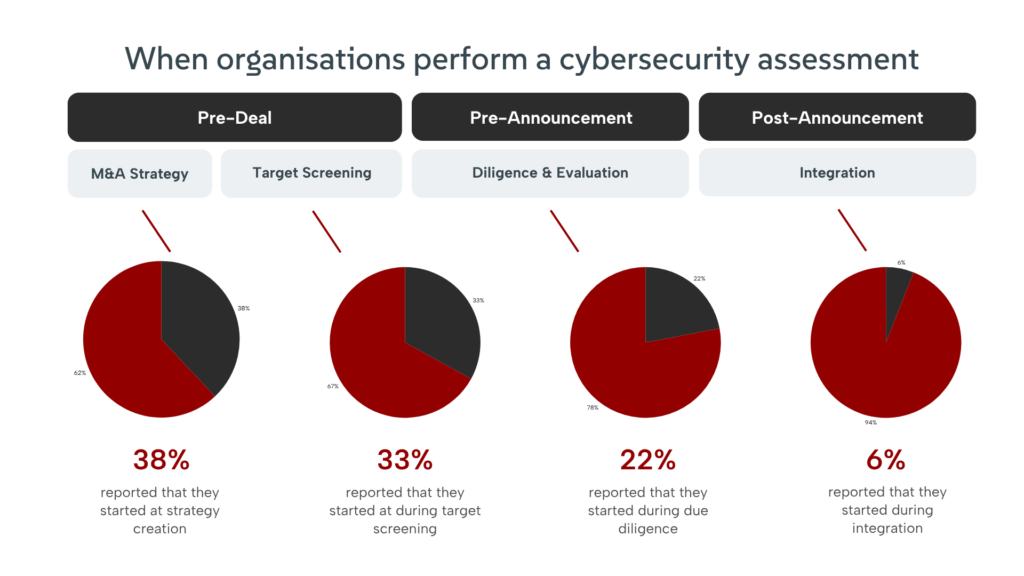
Why Cyber Due Diligence Matters
M&A transactions often involve sharing sensitive data and integrating IT systems. Neglecting cybersecurity due diligence in M&A can lead to:
- Financial risk: Undiscovered breaches can lead to fines, legal penalties, or expensive remediation after the deal closes.
- Operational disruption: Compromised systems can halt business processes, affecting customers and revenue.
- Reputational damage: Post-acquisition incidents can erode trust with clients, investors, and stakeholders.
- Compliance exposure: Undetected non-compliance with GDPR or PDPA can trigger penalties for the acquirer.
Key Steps in M&A Cyber Due Diligence
A structured digital risk assessment allows informed decision-making and ensures the transaction proceeds with confidence. Key steps include:
- Assess existing security posture: Evaluate policies, controls, and past incident history to identify gaps.
- Review data handling and compliance: Verify how sensitive data is stored and ensure alignment with regulations to avoid future liabilities.
- Identify active threats and breaches: Use penetration testing and threat intelligence to ensure buyers aren’t inheriting unresolved cyber breaches or hidden malware.
- Evaluate third-party and cloud risks: Assess the security of vendors and SaaS platforms to prevent insecure integrations.
- Integrate findings into transaction planning: Use insights to adjust deal terms or negotiate warranties.
The Role of Cyber Intelligence
While traditional due diligence focuses on compliance, it is rarely enough. Adopting cybersecurity due diligence in M&A with a focus on real-world intelligence adds the threat context required to see how attackers target organisations.
Cyber intelligence supports M&A due diligence by:
- Prioritising real risks: Identify which vulnerabilities are actively exploited in the wild, allowing teams to focus remediation on the most urgent threats.
- Detecting exposed credentials and data: Monitor dark web sources and breach databases to uncover leaked accounts or sensitive information linked to the target company.
- Understanding industry threats: Analyse attacker tactics and campaigns affecting similar organisations, regions, or supply chains.
- Strengthening decision-making: Provide leadership with clear, risk-based insights to support valuation, negotiations, and integration planning.
Securing Your M&A Deals Starts with Cyber Due Diligence
Cybersecurity must be treated as a core component of deal strategy. Identifying risks early prevents costly surprises and supports a much smoother post-acquisition security integration. Effective cybersecurity due diligence in M&A combines consulting expertise with automated detection and continuous monitoring.
By embedding cybersecurity due diligence in M&A into your planning, your organisation can strengthen resilience and build a stronger foundation for future growth.
Book a free 30-min strategy session with Zentara’s cybersecurity consultants to assess your M&A cyber risks and protect your next transaction.