
AI is Entering the PMO, Ready or Not
Artificial intelligence is no longer a future concept for project management offices. It is already embedded in scheduling tools, portfolio forecasting, risk prediction, and automated reporting. For many PMOs, the pressure to adopt AI is coming from the top, driven by promises of faster delivery, better insights, and leaner teams.
At the same time, compliance expectations have never been higher. Data protection regulations, audit requirements, and internal governance frameworks are tightening across industries. This creates a real tension for enterprise leaders. How do you introduce AI into the PMO without creating new compliance gaps, data risks, or accountability issues?
This is where AI governance in the PMO becomes critical. AI adoption is accelerating faster than most governance models can adapt. Organisations that treat governance as an afterthought risk creating compliance gaps, data exposure, and unclear accountability. Those that approach AI deliberately can unlock value while maintaining trust.
The Current Landscape: Rapid Adoption, Uneven Controls
PMOs are increasingly experimenting with AI-powered capabilities. These range from intelligent resource forecasting and automated status reporting to AI agents that recommend corrective actions across programmes. According to project management and portfolio management research, many organisations are already using AI features without formally labelling them as such.
However, recent guidance from PMO and governance experts highlights several recurring challenges:
- Shadow AI adoption within teams, where staff use AI-enabled tools without formal approval or oversight
- Unclear data boundaries, especially when project data includes personal, financial, or client information
- Lack of accountability for AI-generated recommendations and decisions
- Misalignment between PMO efficiency goals and compliance obligations
As AI becomes embedded in prioritisation, forecasting, and delivery decisions, it effectively becomes part of the organisation’s decision-making fabric. This shift demands stronger PMO governance, not just better tools.
Global attention on AI oversight is also increasing. The principles outlined in the NIST AI Risk Management Framework emphasise transparency, traceability, and human oversight. These principles apply just as strongly to internal project environments as they do to customer-facing AI systems.
Why AI Governance in the PMO Matters
AI in the PMO influences how resources are allocated, how risks are assessed, and how delivery commitments are made. When these processes are automated or augmented by AI, governance gaps quickly become business risks.
Without clear AI governance in the PMO, organisations may struggle to answer basic questions from auditors, regulators, or executives, such as:
- What data was used to generate this recommendation?
- Who approved this output?
- How do we know this decision was unbiased or appropriate?
- Who is accountable if the outcome is challenged?
Governance does not slow innovation. It provides the structure needed to scale AI responsibly.
What Zentara Sees in the Field
At Zentara, we see many organisations approaching AI in the PMO with good intentions, but uneven execution.
The most common early mistake is treating AI as a feature upgrade rather than a capability shift. Teams enable AI-powered insights in project tools without reassessing data access, approval workflows, or reporting responsibilities. This often leads to confusion when auditors ask how recommendations are generated or which data sources are involved.
More mature organisations take a different approach. They start by clearly defining where AI is allowed to assist and where human judgement remains mandatory. For example, AI may be used to identify schedule risks or forecast budget overruns, but final decisions remain explicitly owned by programme leadership.
These organisations also prioritise data hygiene before automation. AI outputs are only as reliable as the underlying project data. Clear ownership, classification, and retention policies reduce compliance issues later and support a stronger AI compliance framework.
Another trend is the growing involvement of security, risk, and compliance teams in PMO AI initiatives. Rather than acting as gatekeepers at the end, they are brought in early to shape acceptable use cases and control requirements. This aligns with best practice guidance that emphasises governance-by-design rather than retroactive enforcement.
A practical framework for compliant AI adoption in the PMO
Rolling out AI safely does not require slowing innovation. It requires structure.
A practical framework for AI governance in the PMO includes four core steps.
1. Define AI use boundaries.
Be explicit about which PMO activities can use AI assistance and which cannot. This includes clarity on decision support versus decision making, and where escalation is required.
2. Map data flows.
Understand what data AI tools access, where it is processed, and how outputs are stored. This is critical for compliance with data protection and audit requirements. If this cannot be clearly explained, the tool is not ready for enterprise use.
3. Embed human accountability.
Every AI-driven insight should have a clear human owner. Someone must be responsible for validating outputs, acting on recommendations, and explaining outcomes when challenged.
4. Monitor and review continuously.
AI behaviour changes as data and usage evolve. Regular reviews of performance, bias, and compliance impact are essential. This mirrors guidance from AI governance frameworks that stress ongoing oversight rather than one-time approval.
This ongoing oversight is a core principle of effective enterprise AI adoption, ensuring that systems remain aligned with organisational values and regulatory expectations over time.
AI in the PMO is a Leadership Issue
AI adoption in the PMO is not just a tooling decision. It is a governance, risk, and leadership challenge.
Decision-makers should focus less on what AI can do today, and more on how its use reshapes accountability, trust, and compliance tomorrow. The organisations that succeed will be those that treat AI as a managed capability, aligned with organisational values and regulatory realities.
AI can make the PMO faster, smarter, and more predictive. But only if it is rolled out with intention. When AI governance in the PMO is done well, AI can make project environments faster, more predictive, and more resilient. When done poorly, it introduces opaque decision-making and regulatory risk.
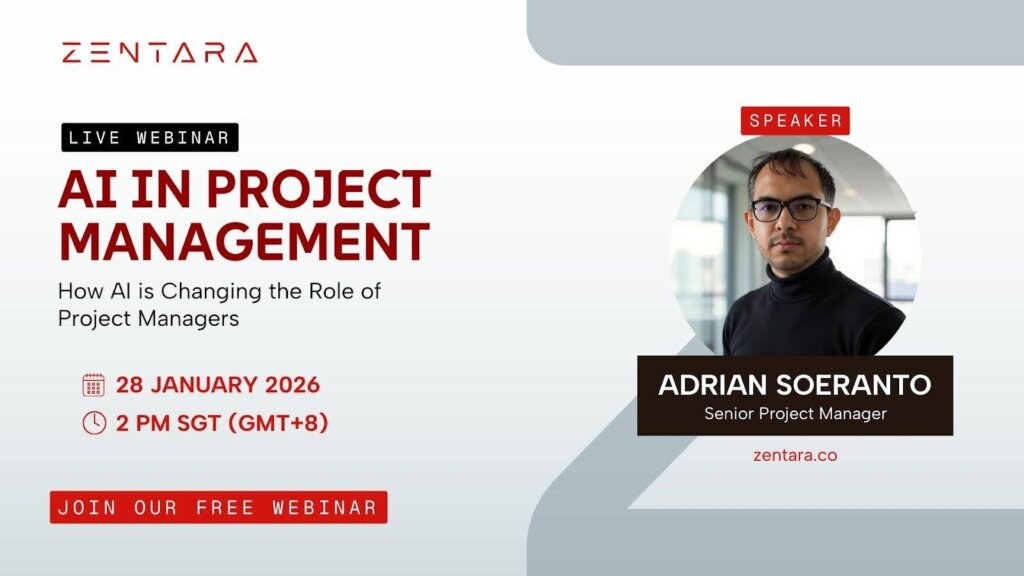
If you want to explore how AI can be introduced into project management environments without compromising governance or compliance, join our upcoming session.